English
My Name in Chinese
Your Chinese name may be transliterated by sound, chosen by meaning, or built from both. A natural result should be reviewed as a complete name.
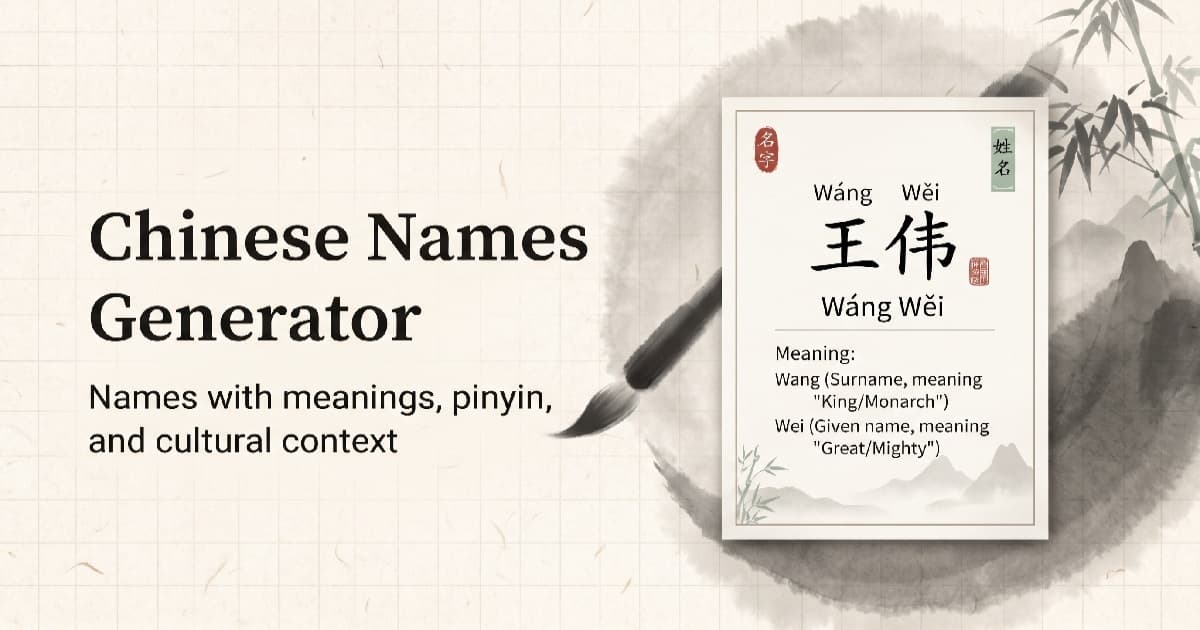
Three ways to find your name in Chinese
Your name can be transliterated by sound, rebuilt by meaning, or replaced with a natural Chinese-style name. The best method depends on whether you want recognizability or cultural naturalness.
- Sound-based transliteration
- Meaning-based naming
- Natural Chinese-style name
- Final native-speaker review
Transliteration has limits
Sound matching can produce recognizable names, but the chosen characters may feel weak or unnatural. Character meaning still matters.
Public use needs extra care
For a class nickname, a generated candidate is usually fine. For public profiles, professional use, or branding, review the complete name before publishing it.
My Name in Chinese
| Name | Pinyin | Meaning | Note |
|---|---|---|---|
| 安娜 | An Na | Common Anna transliteration | Sound-based example |
| 凯文 | Kai Wen | Common Kevin transliteration | Sound-based example |
| 美玲 | Mei Ling | Beautiful and clear | Meaning-first feminine option |
| 明远 | Ming Yuan | Bright and far-reaching | Meaning-first masculine option |
FAQ
Can my English name be written in Chinese?
Yes, often through transliteration, but the best result may also consider meaning.
Should I keep the sound of my name?
Keep the sound if recognition matters. Use meaning if you want a more natural Chinese-style name.
Can I use the generated name legally?
Do not use it for legal purposes without formal review and local requirements.